
Homage to our Proof of Concepts
Before the 7 DOF per leg anatomical exoskeleton design, there was this:
The video above is the original Kinoped proof of concept, a pneumatically driven, non-anatomical machine. While it was a prototype, it proved something no other machine on the market could: we could simulate real ground reaction force vectors (GRFVs) at the footplate in a supine position, well enough that internal test subjects reported feeling their hips, knees, and ankles worked in ways they never had before, sore in places they didn't know they could be sore. The users were activating functional kinetic chains in this device across the sagittal, frontal, and transverse planes.
We also demonstrated that natural plantar rocking is possible in this form factor, as shown below:
That was the whole point of the proof of concept, and it worked! It showed us what makes this IP special, while also allowing us to identify the limitations of a non-anatomical design. This version could approximate the forces, but not the joint-by-joint precision we envision.
From there, we set off to build a hydraulic footplate, since simulating real ground reaction forces meant delivering serious force in a fraction of a second.
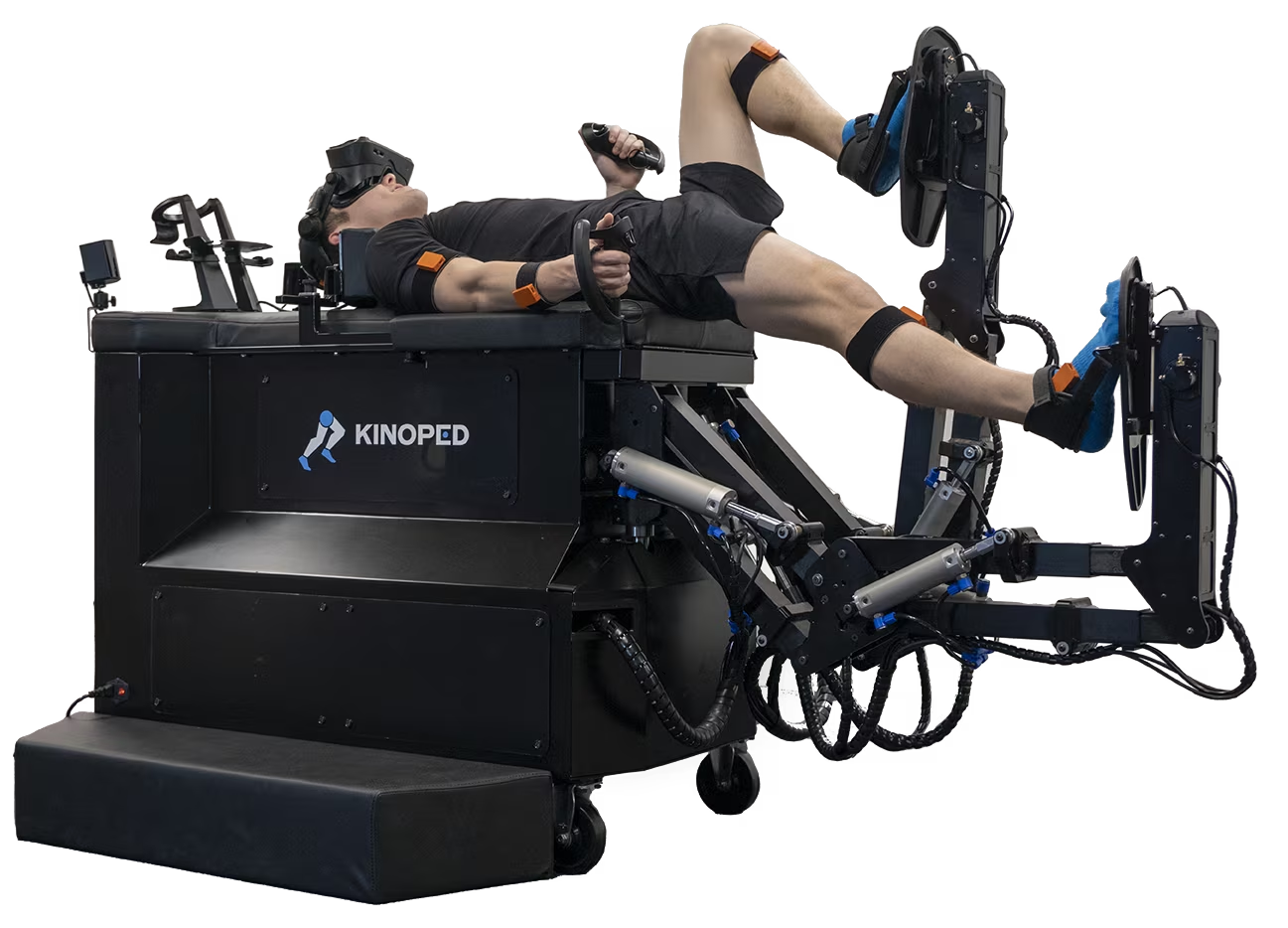
What resulted was a hydraulic/pneumatic hybrid system. We then developed VR on this machine, gamifying the exercises — trace any shape with your feet against live resistance, or play our own take on Beat Saber (Feet Saber) — while training precise movement patterns to develop proprioception:
That's what led us to the electric, fully anatomical, 7-DOF design we're building today, one that doesn't compromise on how the human body actually moves. In addition, every joint now also doubles as a dynamometer, so the machine can measure force, torque, ROM, position, velocity, and acceleration at each of the 7 DoF per leg, in any combination, a level of assessment the old version couldn't offer.
As we continue development on our new prototype, we look forward to sharing all the milestones ahead.